











Editor’s Note: As debates over energy policy in Africa intensify, recent media coverage has leaned heavily into a familiar narrative: casting any reconsideration of coal or fossil fuels as regression. A May 2025 Climate Change News report frames a shift in U.S. policy toward supporting fossil fuel development as a reversal of so-called “green” progress, while an Al Jazeera opinion piece urges Africa to reject any revival of coal outright. Both perspectives gloss over a central issue raised in the essay below: energy realism. They largely ignore the documented economic dislocation, grid instability, and dependency risks that accompany rapid transitions away from reliable baseload power in developing economies. More notably, they sidestep the uncomfortable question of whether Western policy prescriptions—often delivered through loans and conditional aid—prioritize climate targets over the immediate economic and social well-being of African nations. The following essay offers a ground-level view from South Africa, where the consequences of these policies are not theoretical, but already visible in lost jobs, higher costs, and strained energy security.
Guest Essay By Sethakgi Kgomo From CFACT
A heightened crescendo of voices reverberating across the world, to aggressively promote renewable energy, will continue to miss the point about the need to have a sustainable energy mix. Such a mix has to include baseload power. This typically includes coal and nuclear. A sustainable energy mix cannot be maintained if baseload energy in the form of coal-fired power stations is phased out in favor of renewable energy in the form of solar and wind. Here in South Africa, we are being misinformed about the danger of phasing out coal as a reliable energy source.
We are, as a result of this misinformation by the greenie lobby groups, becoming vulnerable as a country, concerning our current and future energy security. There is no empirical evidence to advance a positive case for renewable energy, in the form of wind and solar, as sustainable alternatives to coal power. In addition to coal, you need nuclear energy to ensure that the wheels of industry will turn on a sustainable basis for now and in the future.
South Africa is being inundated with inducements from foreign countries, including, but not limited to, the United States, Germany, and the United Kingdom motivating us to cut CO2 emissions. We are bombarded with their vociferous calls to “save the planet.” It is due to that pressure on South Africa that one large coal power station has already been prematurely closed. The result of this decision has been a disaster for the inhabitants of the nearby town. This town depended on the operation of the local coal mining industry and on that particular power station. This premature government action didn’t only lead to job losses in coal mining and the power station but resulted in the destruction of the local economy. The flourishing local convenience stores, restaurants, and other business enterprises also closed down because their patrons had disappeared.
Please also note that South Africa has an enviable record of caring for the planet. People from all over the world come here to see our wonderful massive wildlife reserves and to visit our mountains, coastlines, and deserts to appreciate the incredible natural wonderland.
It is irritating that we are, in a myopic way, being induced to introduce huge wind and solar installations in South Africa with all sorts of false promises. Usually the inducements come with the promise of all the jobs which will be created. But it turns out that the jobs are only menial in nature and only exist during the construction phase. One sad reality, which is hidden from the holistic picture of wind and solar energy systems, is that the promised jobs disappear when the short construction phase is completed. It is important to state that since all solar and wind hardware is imported, there are no manufacturing jobs created. This reality defeats the government’s stated localization and industrialization objectives. Furthermore, the number of jobs required to actually run the solar and wind in the longer term are minimal. An important socio-economic case to make is that there is a net job loss if coal is closed and replaced by wind and solar, a fact that the greenies and other protagonists of renewable energy are avoiding.
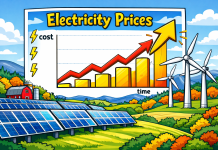
It is also important to note that wind and solar energy have the net result of increasing electricity costs. This is particularly bad for the poor. The serious message to the United States is that the authorities must not think that their “Aid” is helping South Africa, particularly poor people. That “Aid” is the opposite of what is intended. Also of great importance to note, is that usually, the “Aid” is merely a loan which has to be repaid with interest. In the final analysis we, as South Africans, have our arm twisted, merely to push us further into a debt bracket.
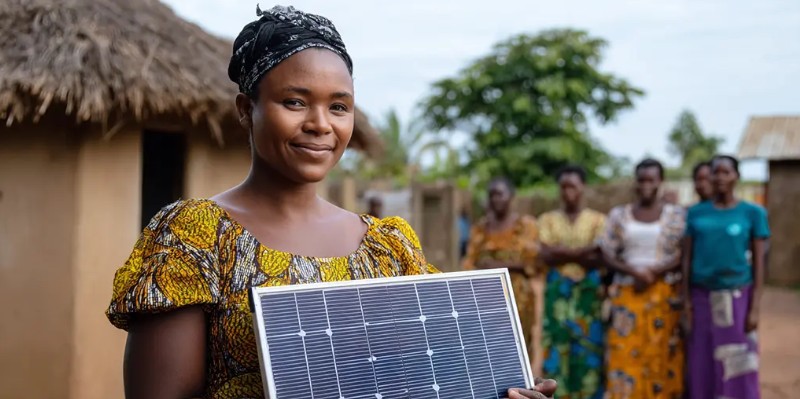
In conclusion, I wish to submit that the result of this “aid” is to cloud the opinions of South Africa concerning the supposed goodwill of the United States. We find ourselves becoming dependent on Chinese exports of solar panels. So, in many cases, U.S. aid packages, particularly when forced on us, result in a damaged federal image of the United States of America, which is an undesirable outcome.


The Heartland critique correctly identifies the structural failures of industrial solar within a centralized, subsidy-dependent grid architecture. However, it mistakenly attributes these failures to solar energy itself rather than to the institutional and financial framework in which it is deployed. High-efficiency CPV systems, when integrated into decentralized, user-owned microgrids, fundamentally alter the economic and thermodynamic profile of solar generation. In such systems, land intensity declines, grid instability is eliminated through local balancing, and capital formation becomes endogenous rather than subsidy-driven. Thus, the failure of industrial solar is not evidence against solar energy, but against the Second Wave institutional model attempting to govern a Fourth Wave energy system.